
Towns Deed Types Explained
The Clerk of Superior Court sits at 48 River Street, Suite E in Hiawassee. That office records Towns County deeds and plats. A warranty or quitclaim deed claims a transfer of title. Not everything in the books does that. Security deeds, assignments, liens, cancellations, and satisfactions do something different. They record financing and other claims against the land instead. Read the instrument type before trusting any name the index returns.
| Deed Type | What It Does | Common Use |
|---|---|---|
| Warranty deed | Conveys the stated interest with warranties | Ordinary arm's-length transfer |
| Quitclaim deed | Conveys whatever interest the grantor holds | Interest cleanup or family transfer |
| Executor or administrator deed | Conveys through an estate representative | Probate-related transfer |
| Tax deed | Records a transfer following tax-sale procedure | Delinquent-tax chain research |
| Security deed | Secures a debt against real property | Financing and release research |
What appears in the books is evidence only of what reached the Clerk. Unrecorded claims, probate rights, defects, or a boundary fight may still lurk outside the record. So compare the newest conveyance against prior-deed references and any releases tied to it. Towns County deed records read far more cleanly once every book and page, recording date, party role, and land description is written down.
Search the Georgia Deed Index
Georgia's statewide index is the practical online route into deed records. Through the GSCCCA search system, you can query party name, book and page, instrument type, PT-61, liens, plats, and UCC filings. Every Georgia county carries a baseline reaching back to at least January 1, 1999. Towns coverage may run deeper through historic additions. The exact earliest online year for the county is not published.
| Index route | Input | Use |
|---|---|---|
| Name | Grantor or grantee variants | Find transfers linked to a party |
| Book and page | Reference from deed or parcel card | Open one known recording |
| Instrument type | Deed, security deed, release, lien | Narrow a crowded name result |
| Plat index | County, subdivision, party, or reference | Connect lot and boundary notes |
The official index explanation appears in the captured image.
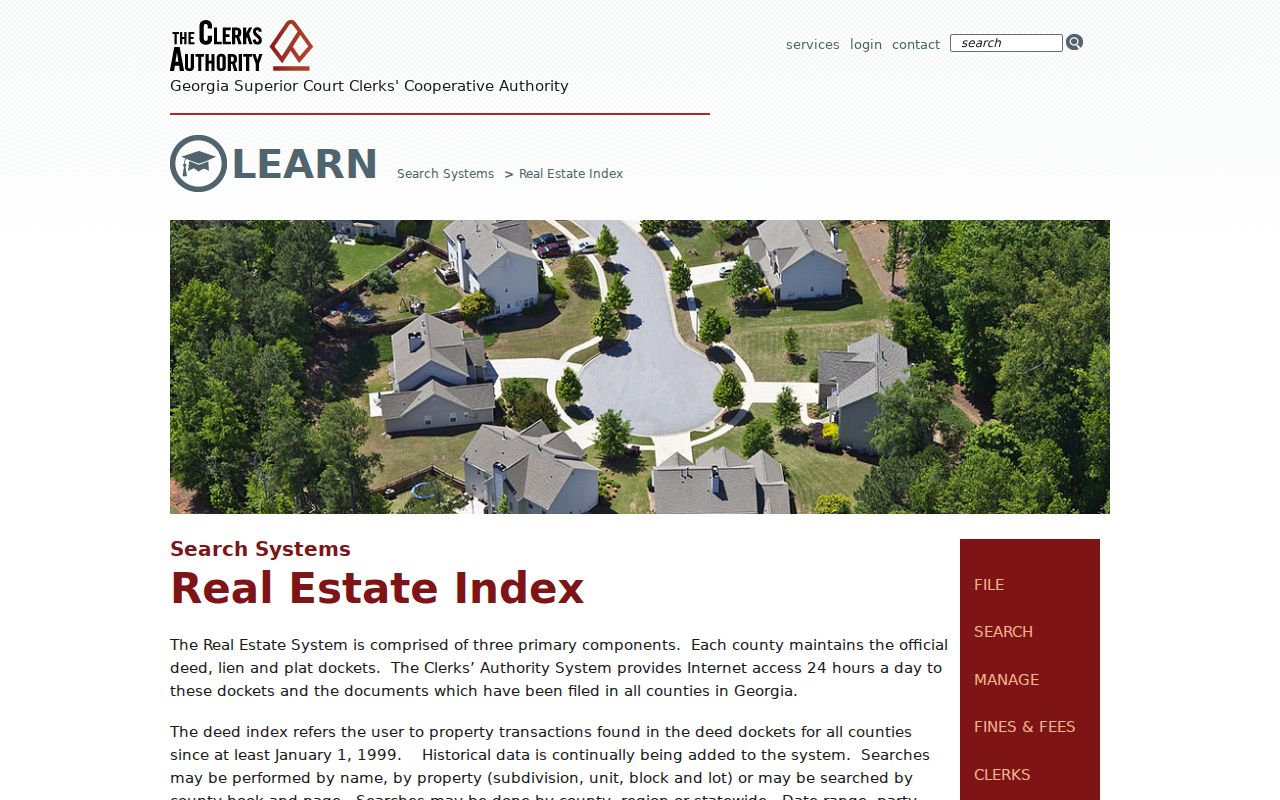
The view spells out what the statewide index covers and how to reach images, so confirm current account and copy terms before placing an order.
Walk Towns Grantors Backward
A grantor gives up an interest. A grantee takes it. Start your search from the newest confirmed grantee. Read that deed closely for the grantor and the prior-deed reference. Then hunt that same grantor's earlier purchase, where they appear as grantee. Keep repeating. The legal description, acreage, land lot, district, plat, and adjoining-owner clues should all stay consistent.
- Find the current purchase deed with the present party shown as grantee.
- Record its grantor, execution date, recording date, legal description, and prior reference.
- Search that grantor as an earlier grantee and match the same tract.
- Move to Clerk books or archive finding aids when the online trail ends.
- Grantor
- The party transferring the stated interest.
- Grantee
- The party receiving that interest.
- Chain of title
- The ordered sequence of recorded conveyances for one tract.
- Book and page
- A location within the Clerk's deed-book sequence; newer systems may also use an instrument number.
Towns Deed Books Run Deep
Towns County keeps its deed history in numbered books. The sequence now stretches well past seven hundred volumes. A 2024 newspaper account traced the collection back to seventy-eight books. Those early books hold roughly a century and a half of legal records. By that count the sequence had climbed to about Book 735. A 2025 report put the run nearer Book 745. Each new book holds roughly 850 pages and fills in just 20 to 40 days. The same report counted more than 50 real-estate visitors a day. Three clerk employees handle the room.
Take these numbers as snapshots of a busy office rather than promises about coverage. They do explain one practical point. An old tract often lands faster through a book-and-page reference than through an address search. Before visiting the Clerk of Court at 706-896-2130, ask where your cited book sits. It might be at the counter, on a terminal, on microfilm, or in storage.
Before Towns County Existed
Towns County was created in 1856 from land taken from Union and Rabun counties. That matters for deed research. A chain for land held before the founding date may cross a county line. Even so, the parcel sits in Towns today. Work backward from the current Towns deed. Keep the old land-lot and district terms intact. Then test the parent-county indexes. The Georgia Archives county-card index helps identify microfilmed county materials.
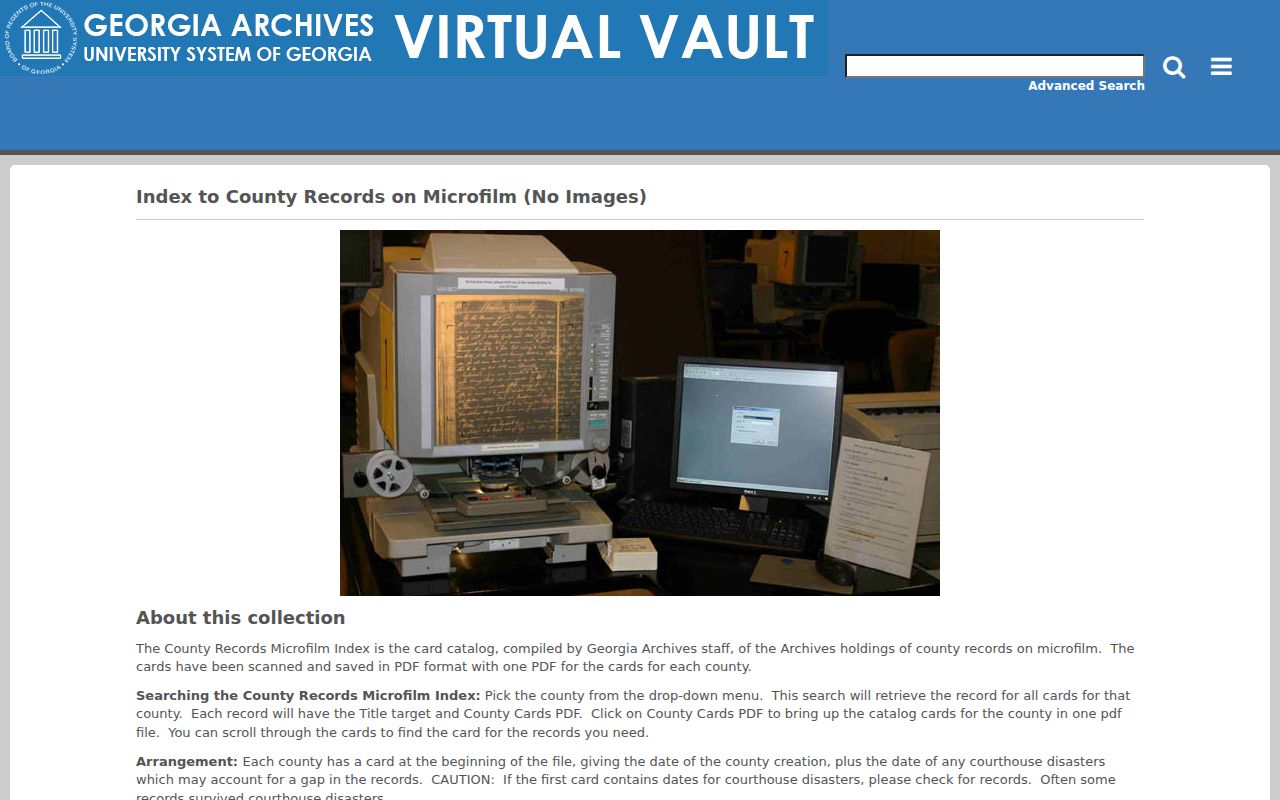
Those cards are finding aids, nothing more. They do not promise that every deed image is online. Georgia Archives, FamilySearch, the Towns County Historical Society, and Mountain Regional Library can supply context when names or place descriptions have shifted.
Plats Support Towns Deed Research
A recorded plat ties a deed to a subdivision, lot, block, road, easement, common area, surveyor, or revision. Search the GSCCCA Plat Index by Towns County, subdivision or party, and book and page. Then set the recorded plat beside the current assessor parcel. Tax-map lines help orient the search. They are not a survey. Record the plat status, approval and recording dates, road names, rights-of-way, and every deed reference printed in the notes.
Estates Can Redirect a Deed Chain
An executor, administrator, trustee, heirs notation, or survivorship filing can break a clean sale-to-sale chain. Search Towns Probate by decedent or estate number. Then compare the appointment, the order, any affidavit, and the later deed that follows them. A will may explain intent, but it conveys nothing by itself. Match every probate name to the legal description. Match the recorded instrument too, before extending the chain further.
FANS Watches Future Filings
The free statewide Filing Activity Notification System watches selected names, addresses, and document criteria for new real-estate, lien, plat, UCC, or PT-61 filings. Registrations expire after one year. Renewal is required. Post-office boxes cannot be used for address monitoring. FANS looks forward only. It cannot warn about filings made before enrollment, and Towns County offers no separate alert service. Treat an alert as a prompt to pull the actual deed record, never as proof that the chain is clear.
Resolve Towns Name Variants
A name can look different from one instrument to the next in Towns County deed records. Marriage, estate administration, and trust wording all shift how a party appears. Initials, corporate suffixes, and indexer choices do too. Start with the surname alone. Then try the full name, initials, and likely spellings. For an entity, run the name with and without punctuation. The Georgia business search confirms a company's formal name and registered agent. It cannot reveal who beneficially owns the parcel.
Never tie documents together on a name match alone. Anchor the land itself instead. Use book and page, parcel number, acreage, land lot, district, subdivision, road or water reference, plat, and adjoining owners. When one deed cites an earlier instrument, that citation usually beats a broad party-name search. Keep notes on candidates you reject. That way the same false trail does not cost you another hour.
Get a Towns County Deed
Index access and document images online are two separate services, each with its own cost. GSCCCA account pricing and local copy fees change. Ask the Clerk for current figures before you order. Gather the party names, instrument type, county, and the book and page or instrument number first. Also ask whether a plain copy will do. Some receiving offices insist on a certified copy.
The Clerk's public counter sits on the courthouse second floor. The address is 48 River Street, Suite E, Hiawassee, Georgia 30546. Published weekday hours run 8:30 a.m. to 4:30 p.m. Calling or visiting matters most for older books, image gaps, and a deed record traceable only by legal description. For a written request, name the exact recording. Settle price, payment, delivery, and certification before you send any funds.
Recorded, not guaranteed. Towns County deed records show instruments accepted for recording. They do not supply a title opinion or rule out an unrecorded interest.