
Towns Tax Record Coverage
Towns County property tax records come from two offices. The Board of Tax Assessors keeps the digest, parcel characteristics, fair market value, assessed value, and exemption data. The Tax Commissioner handles billing and collection. Keeping those roles straight keeps a payment question away from the staff who set your value.
| Field | What It Shows | Where |
|---|---|---|
| Fair market value | County estimate of full value as of the valuation date | Tax Assessor |
| Assessed value | Georgia's taxable assessment base before exemptions | Tax Assessor |
| Exemptions | Approved homestead, senior, veteran, conservation, or other relief | Tax Assessor |
| Bill and balance | Levy, payments, and amount due | Tax Commissioner |
| Delinquency | Late balance, advertisement, lien, or sale-stage clues | Tax Commissioner and Clerk |
Georgia assesses most taxable property at 40 percent of fair market value. The ratio is statutory. Exemptions can reduce the net taxable amount before millage is applied. One year's digest value is an annual tax administration figure, not a recorded sale price. Never treat the two as interchangeable.
Two Towns Tax Portals
The Towns County tax site combines general information with payment functions. The payment options run through Government Window. Both property tax and hotel-motel tax appear as choices there. Prior-year bills and receipts are not guaranteed to display. Check the account. Do not assume a full history is available.
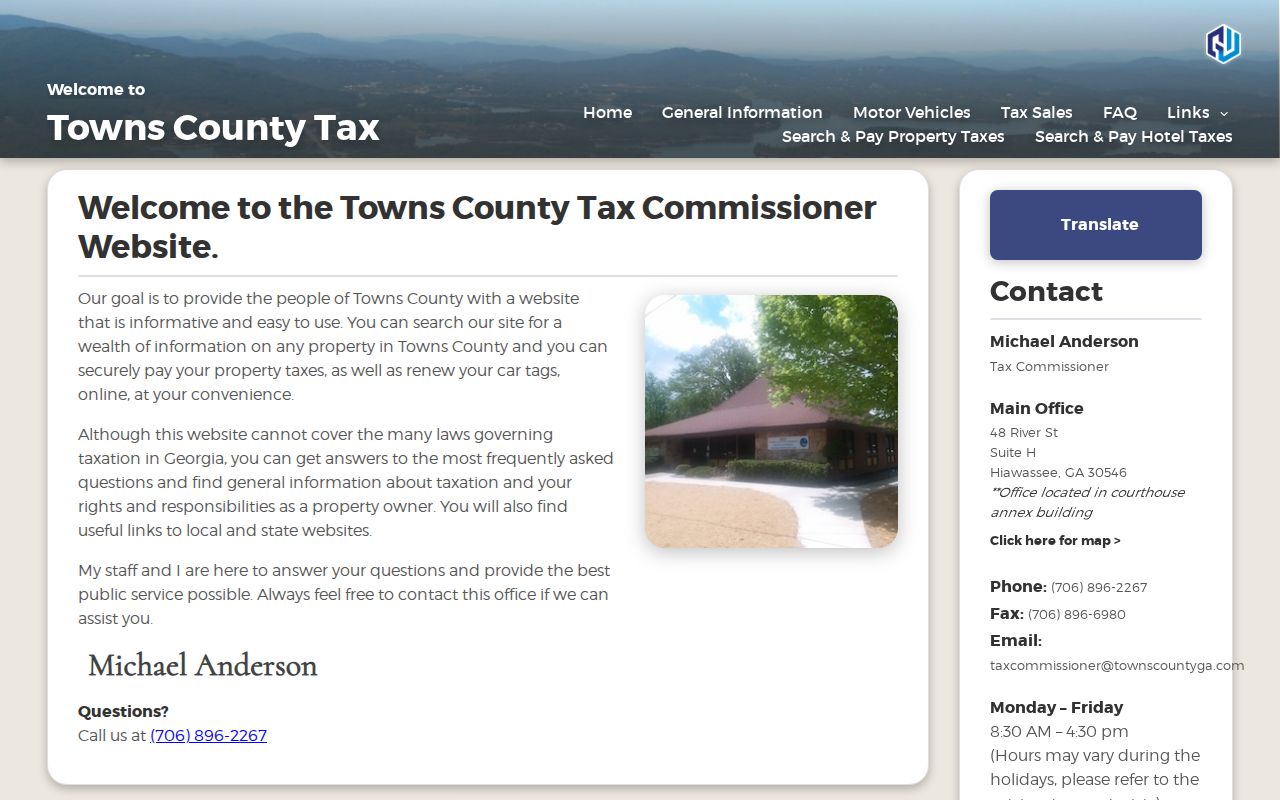
The portal is the official online route. If it blocks access, call the Tax Commissioner at 706-896-2267 or visit 48 River Street, Suite H, Hiawassee.
Look Up a Towns Tax Bill
Start with the exact parcel number from qPublic. That number beats a mailing city or owner spelling. Pull the current bill and note the tax year, billed owner, parcel, original levy, adjustments, payments, and any remaining balance shown. Save a receipt or account printout with the date you searched.
- Find the parcel in qPublic and copy its number and assessed value.
- Open the Tax Commissioner portal and match the parcel and tax year.
- Compare exemptions and net taxable value with the assessor record.
- Ask the office about any balance, advertisement, tax lien, sale status, or redemption issue that is unclear.
- Assessed value
- The statutory share of fair market value used as the starting tax base.
- Millage
- Tax per thousand dollars of taxable assessed value.
- Homestead exemption
- Approved relief tied to an eligible primary residence.
- Tax lien
- A claim arising from unpaid property tax; its status requires official confirmation.
Towns Value Date and Ratio
Georgia law sets January 1 as the valuation date for property tax purposes. Towns County applies the state's 40 percent assessment ratio to fair market value when it calculates a tax bill. On the assessor's card, land, improvements, and accessories may each carry their own amounts, but the final bill applies county tax rules to the net taxable assessment.
The county's general tax information page explains these valuation rules in plain terms.
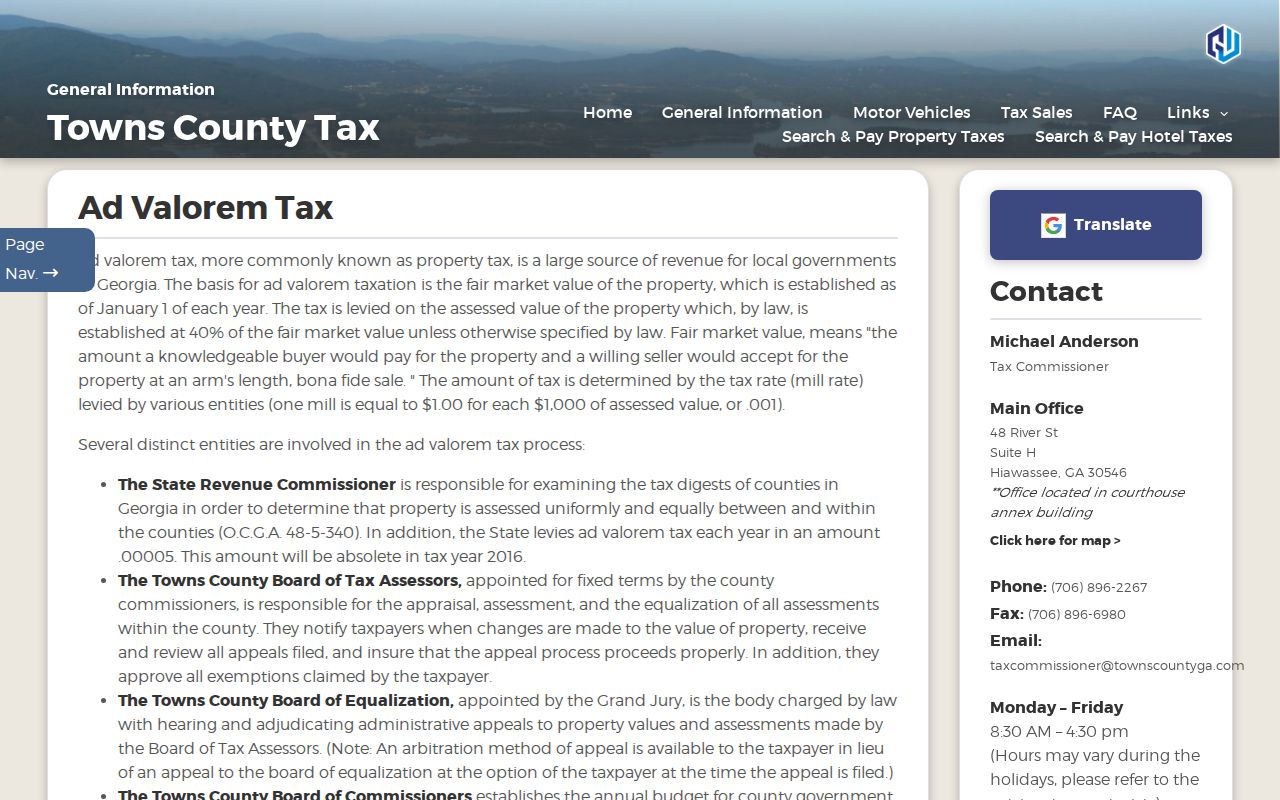
Published rules help you read a bill. The current account and annual assessment notice still control the parcel-specific figures.
Towns Property Tax Exemptions
The Tax Assessor handles homestead applications, conservation-use matters, personal-property returns, and taxpayer returns. Published local material covers homestead, senior, veteran, conservation, mobile-home, and Freeport topics. Eligibility varies. Filing rules differ too. Use the current form. An exemption changes taxable value only, never fair market value or ownership, so confirm it appears on the assessment record before relying on it in a tax estimate.
Separate Market and Sale Price
Fair market value is the assessor's annual estimate for tax administration. Assessed value is the statutory share. Exemptions and millage come after that. Net taxable value reflects the allowed adjustments. A deed sale price is none of these. It may be qualified, non-arm's-length, or otherwise unsuitable as a stand-alone value conclusion. Keep all four labels and their dates separate when comparing Towns County property tax records. A parcel card may also break out land, improvement, and accessory values, so read their sum from the current assessment record rather than an old bill.
January 10 Towns Tax Due Date
Towns County's tax information identifies January 10 as the property-tax due date. Confirm the year and mailing status first. Check the payment method and office closures too. The Tax Commissioner posts weekday hours of 8:30 a.m. to 4:30 p.m., closing noon to 1 p.m. Official pages conflict on some penalty intervals. Guesswork cannot settle that. Request a dated payoff from the Tax Commissioner when a balance is late, a sale is near, or a closing depends on the amount.
Note: A portal balance can change at any time after new interest, costs, corrections, or a payment posts.
Delinquent Towns Tax Research
A delinquency notice can supply the owner or record holder, parcel clue, deed-book reference, amount, and sale information. Treat it as a lead, not the final status. The Tax Commissioner confirms the payoff. The Clerk of Court handles deeds, liens, and releases filed after a sale. A notice date is not a completed tax sale. Redemption rights can alter that chain. Later recorded instruments matter too, and buyers or heirs should get legal advice when the status could affect title.
Document a Towns Tax Check
Write down what the account shows before you close it. Keep the parcel number, the owner of record spelling, the physical address, and the taxing district exactly as displayed. Copy the acreage, each value component, and every exemption. Record the bill year, payment date, and balance. Add the search date and the portal URL. If the tax roll details came by phone or at the counter, note which office answered and what you asked. A dated record is far easier to reconcile later, after a correction, appeal, deed transfer, or payment.
When figures disagree, compare like with like. A January 1 assessment belongs to the valuation year. A bill reflects adopted millage and exemption treatment, while a payment record tracks collection. A deed's consideration line documents a transfer, not a tax appraisal. Take value and exemption questions to the Assessor. Take billing, payoff, and collection status to the Tax Commissioner.
Towns Assessment Search Limits
qPublic calls its Towns data the most current published digest, but it names no exact deed-to-roll refresh interval and no online start year. A sale recorded after January 1 can therefore appear in deed records while the owner or value fields on the tax roll still lag behind.
For recorded ownership, search the Towns County deed records. For the meaning of each value field, see the property value records. The property tax record answers assessment and collection questions only. It cannot certify boundaries or clear title.
Appeal a Towns Assessment
An owner can appeal value, uniformity, or taxability. The window is 45 days from the assessment notice date. File with the Towns County Board of Tax Assessors and keep proof of delivery. Strong evidence includes the notice, the parcel card, photos, repair facts, comparable-property records, deeds, surveys, and a clear statement of the issue.
The assessor reviews the filing first. Further review may go to the Board of Equalization or another path Georgia procedure allows. The tax bill itself is not the notice that starts every assessment appeal. Read the notice date and its instructions carefully. Call the Assessor at 706-896-3984 if the deadline or form is unclear.
Appeal window. Towns County assessment appeals generally must reach the Board of Tax Assessors within 45 days of the notice date. Verify the deadline printed on the notice.